Support
Who backs the Berlin Model.
Ten Berlin institutions have signed on to begin adopting the framework — backed by a growing group of investors, founders, and researchers.
Ten institutions, one shared framework.
Ten Berlin institutions signed a Memorandum of Understanding in summer 2026, together with the Berlin Senate, to begin adopting the Berlin Model. The framework is now in a three-year trial phase.
* Charité has agreed to pilot parts of the model but not yet adopt it fully; discussions are ongoing.
This is a working document. Over the three-year trial, the institutions and JUNI will measure how the model performs and develop it further as spinouts and institutions put it to use. See how the model works →





















Public supporters also include Philipp Baaske (co-founder of NanoTemper Technologies and Vice President of Entrepreneurship at LMU Munich, signed in a personal capacity), Johannes Fruehauf (founder of BioLabs and LabCentral and founding partner of Mission BioCapital), and Andreas Schmidt (serial biotech founder, co-founder and general partner of Springboard Health Angels, signed in a personal capacity). The list is growing, and will expand to include more investors, founders, researchers, and organizations supporting the framework.
Say it in your own words.
The strongest case for the Berlin Model is what founders, investors, and researchers have seen themselves. If improving IP transfer matters to you, say so publicly, from your own perspective. A few angles that work:
The investor perspective
Deals that took too long, cap tables you could not fund, regions you never looked at because the terms were unclear — and what published, fundable terms change for the region.
The founder perspective
What your IP negotiation cost you in time, money, or lost investment opportunities — and what could change when the terms are public and the process takes 13 weeks at most.
The institutional perspective
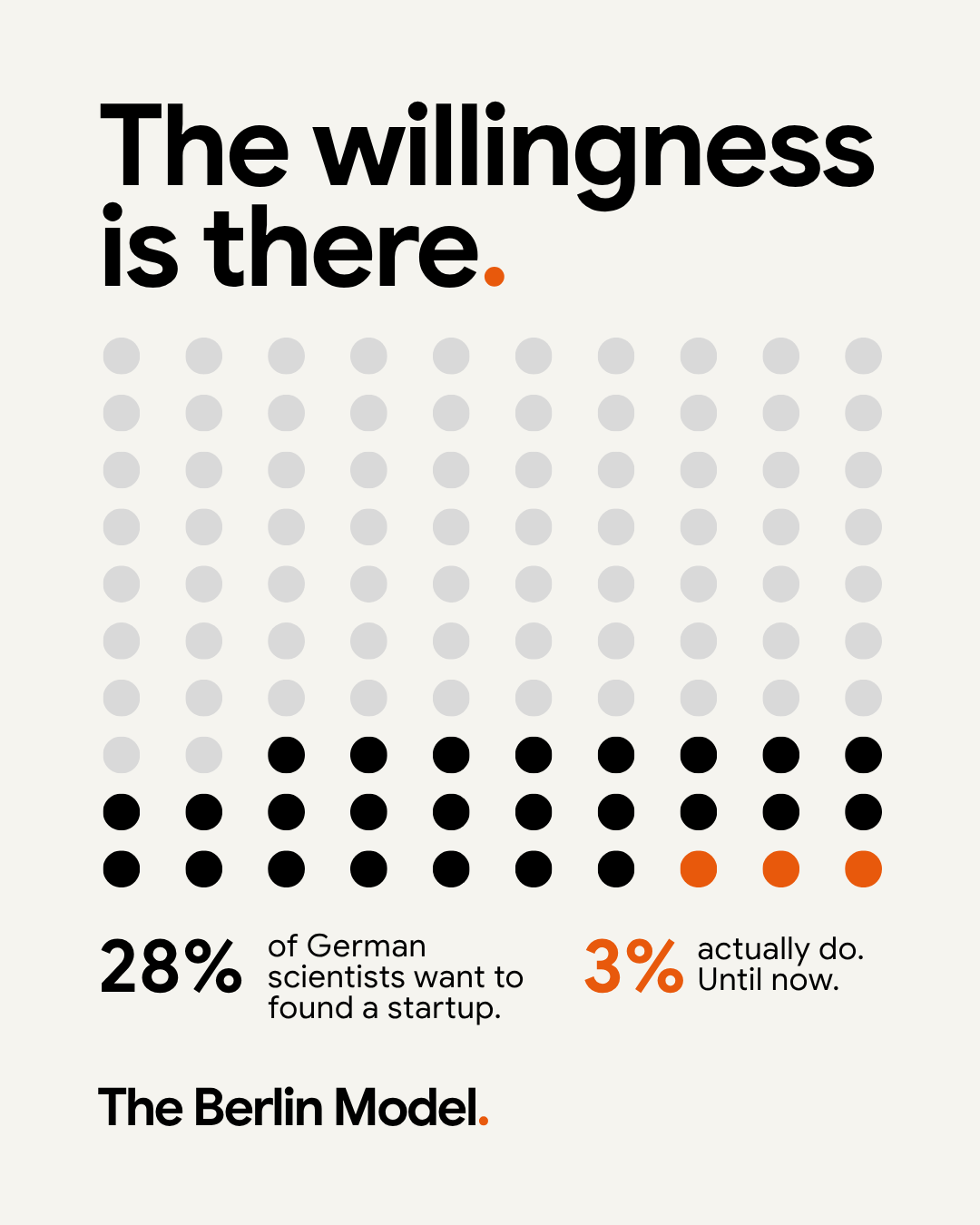
The benefits of a clear process and prepared founders, terms that ten institutions stand behind and investors want to fund, or why more scientists might found when they know what to expect.
The ecosystem perspective
The challenges you have seen others face with IP transfer, and how the Berlin Model could help founders, investors, institutions, or the ecosystem as a whole.
The pro-Europe angle
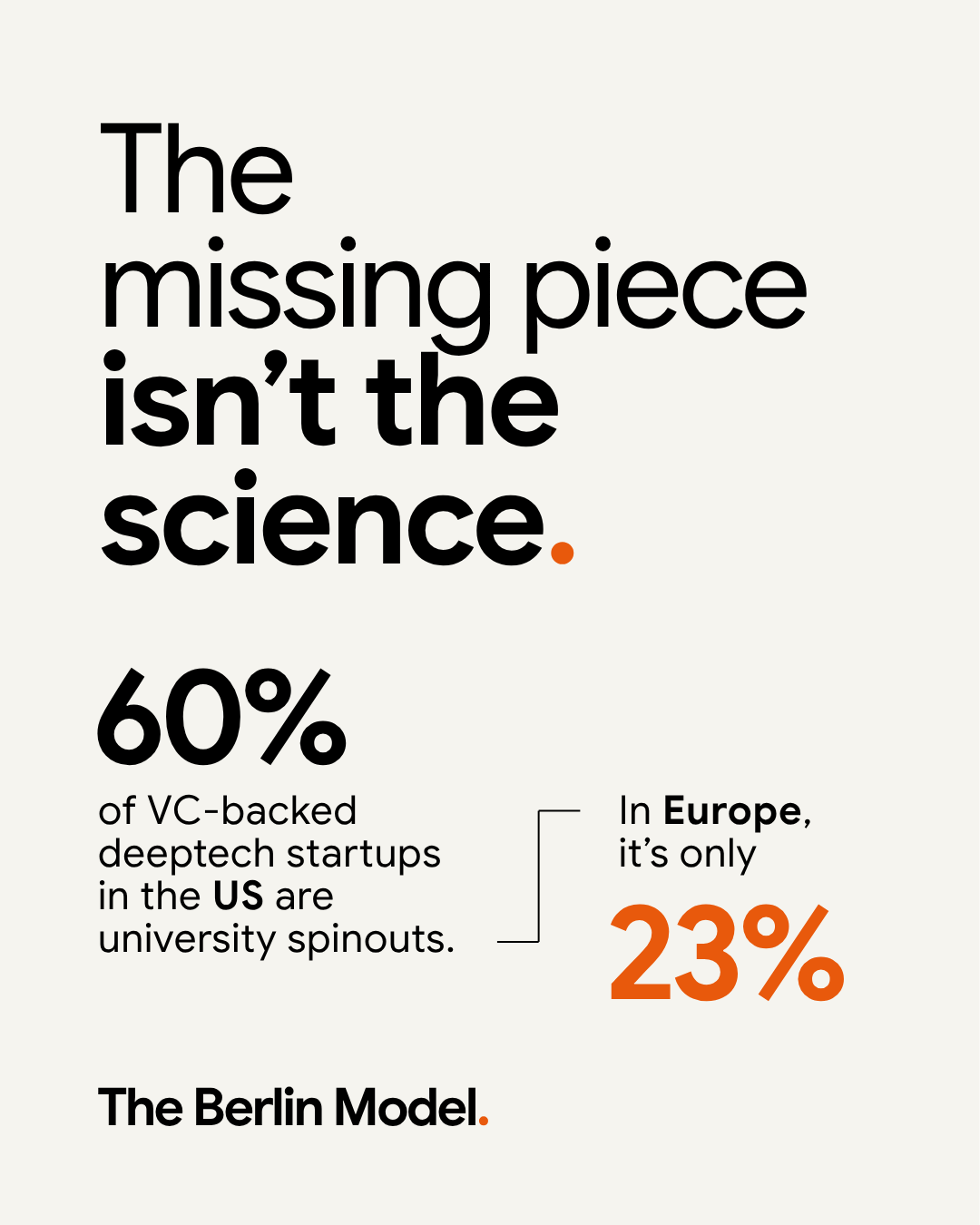
Why Europe has the research but not the companies, what it could gain from this approach, and which regions you think should adopt it next.